
The U.S. Environmental Protection Agency (EPA) Ecoregions – Decoded
EPA ecoregions are ecological “neighborhoods” of North America. Instead of drawing lines by state borders or climate alone, they group areas by similar ecosystems such as geology, landforms, soils, vegetation, climate, and how humans use the land. Picture a giant patchwork quilt where each patch grows, drains, and lives a little differently.
Why they exist
They help scientists and land managers compare apples to apples. A stream in one desert basin should be judged against other desert streams, not a mossy Appalachian creek. Ecoregions make environmental data far more meaningful for:
- Water quality standards
- Wildlife and habitat planning
- Conservation and restoration
- Agriculture and land management
The four EPA ecoregion levels
Think of it like zooming a map app from continent view down to neighborhood streets.
| Level | Scale | What it shows | Example idea |
|---|---|---|---|
| Level I | Very broad | Major ecological regions of North America | Eastern Temperate Forests vs. Great Plains |
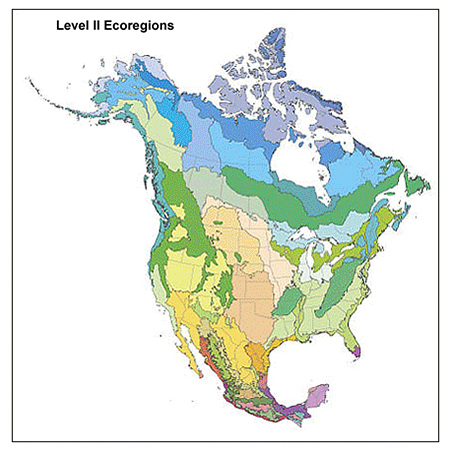
| Level II | Continental subregions | Climate and vegetation patterns refine | Warm deserts vs. cold deserts |
| Level III | Regional ecosystems | Landform, soil, and vegetation combos | Texas Blackland Prairie vs. Edwards Plateau |
| Level IV | Local detail | Fine-scale ecological differences | Specific river valleys, escarpments, or soil belts |
Level III and IV are where things get especially useful for real-world planning and education.
Level I Ecoregions of North America (big picture)
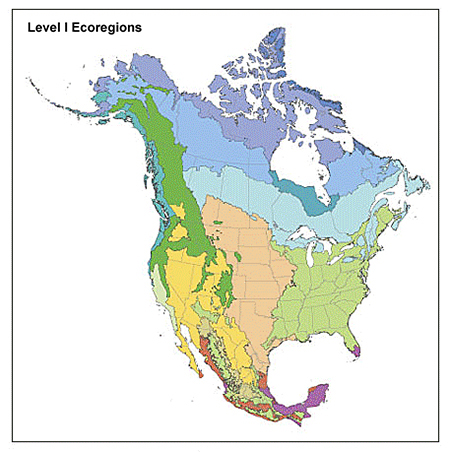
These are the giant ecological “chapters” of the continent, such as:
- Eastern Temperate Forests
- Great Plains
- Northwestern Forested Mountains
- Marine West Coast Forest
- Mediterranean California
- North American Deserts
- Southern Semi-Arid Highlands
- Temperate Sierras
- Tundra
- Taiga
Each one has its own climate rhythm, dominant plants, soils, and natural disturbance patterns like fire or flooding.
Level II, III, and IV Ecoregions of North America (Breaking it up further)
How this differs from other region systems
EPA ecoregions are ecology first, not political, not just climate, and not just plant zones.
| System | Based mostly on | Purpose |
|---|---|---|
| EPA Ecoregions | Ecosystem similarity | Environmental management |
| USDA Hardiness Zones | Winter temperature | Gardening survival |
| States/Counties | Political lines | Governance |
| Biomes | Broad climate + vegetation | Global ecology education |
Why might this be useful for you?
EPA ecoregions divide the continent into ecological look-alikes so environmental science compares ecosystems with their true peers instead of distant ecological strangers.